Our first Miner King article covered the App Store launch and a beginner's first two trips underground. This one goes one step further: what the eight shop upgrades actually do, what they cost on the first levels, and a simple rule for deciding when to turn back. Miner King is playable in the browser and on Google Play, iPhone, iPad and Mac; the Play box at the end links every store where it is live.
We played the web version on 21 October 2026 in a 1280×800 window with the keyboard, starting from a fresh save. Every number below is one we saw on screen.
The shop, card by card
You land in the shop at the start of every trip. Gems you carry go into the SELL box on the left (our first seven gems sold for $19). The right side is a grid of eight upgrade cards. Tap a card and a panel opens with the upgrade's name, what it does, the level change, the effect and the price, plus a Buy button.
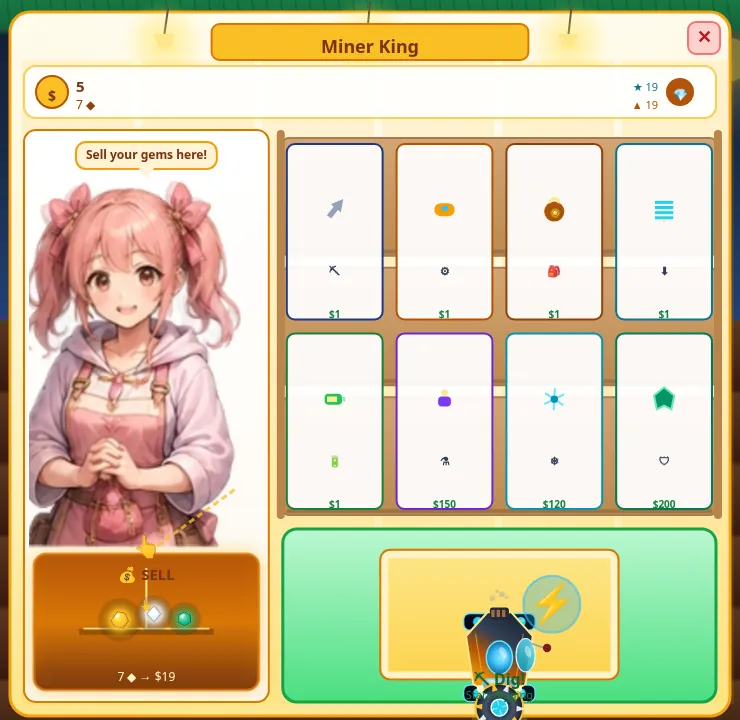
| Card | What the game says it does | First price we saw |
|---|---|---|
| Drill Tip | Breaks stone layers faster | $1, then $51 for level 2 |
| Drill Body | Stronger base digging power | $1 |
| Bag | Carry more gems before selling | $1 (8 → 16), $1 (16 → 24), then $100 (24 → 32) |
| Depth | Longer cable: shop upgrades reach 5000 m | $1 |
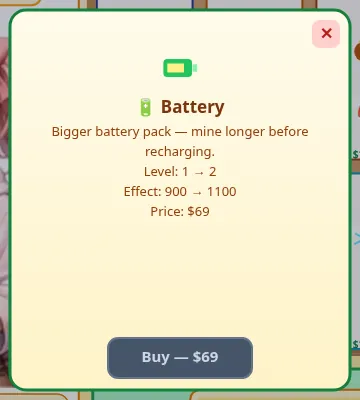
| Battery | Mine longer before recharging | $1 (700 → 900), then $69 |
| Refinery | +15% gem sell price per level | $150 |
| Cooler | Less power lost per move and dig | $120 |
| Gas Shield | Smaller battery loss when you hit gas | $200 (effect 1/3 → 1/4) |
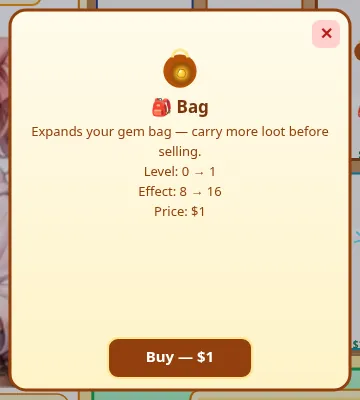
The first levels of Tip, Body, Bag, Depth and Battery cost $1 each, so spend your opening cash on them before your first real dig. After that the prices jump: Drill Tip level 2 asked $51, Battery level 2 $69 and Bag level 3 $100.
Gas pockets and the Gas Shield
The in-game help explains that from 300 m down, yellow gas tanks show up more often the deeper you go. Touching one explodes and drains part of your maximum battery, and if a blast or an empty battery downs you, you lose your cash and the gems in your bag.

At $200 the Gas Shield is the most expensive card on the first screen. Our new save cannot reach 300 m yet (the depth limit reads 300 m), so we did not meet gas on this session. It is an upgrade to save for once your trips are reliably reaching the bottom of the cable, not before.
Trip one: 211 m and a lost bag
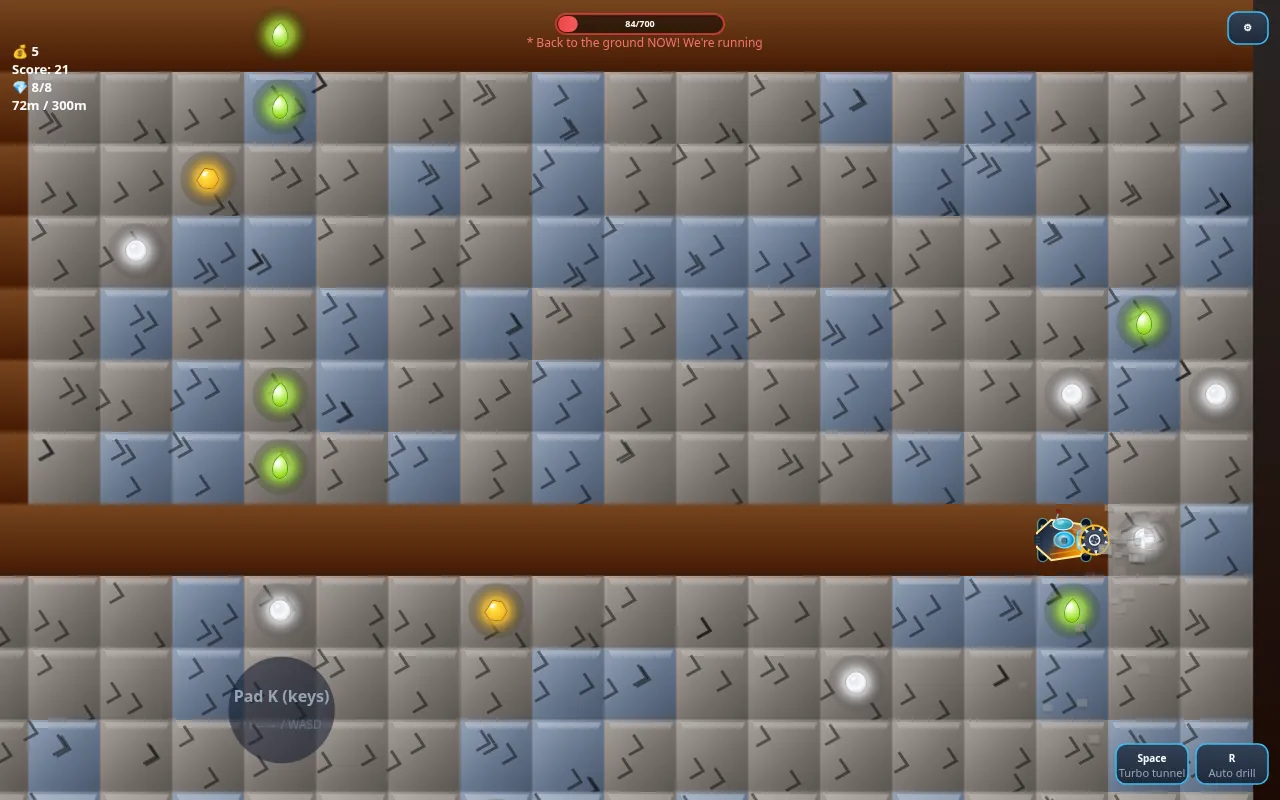
With the cheap upgrades bought (bag 24, battery 900) we dug straight down and kept going. At 206 m we had 14 gems, the battery read 54 of 900, and a red line at the top said Back to the ground NOW! We're running out of energy!
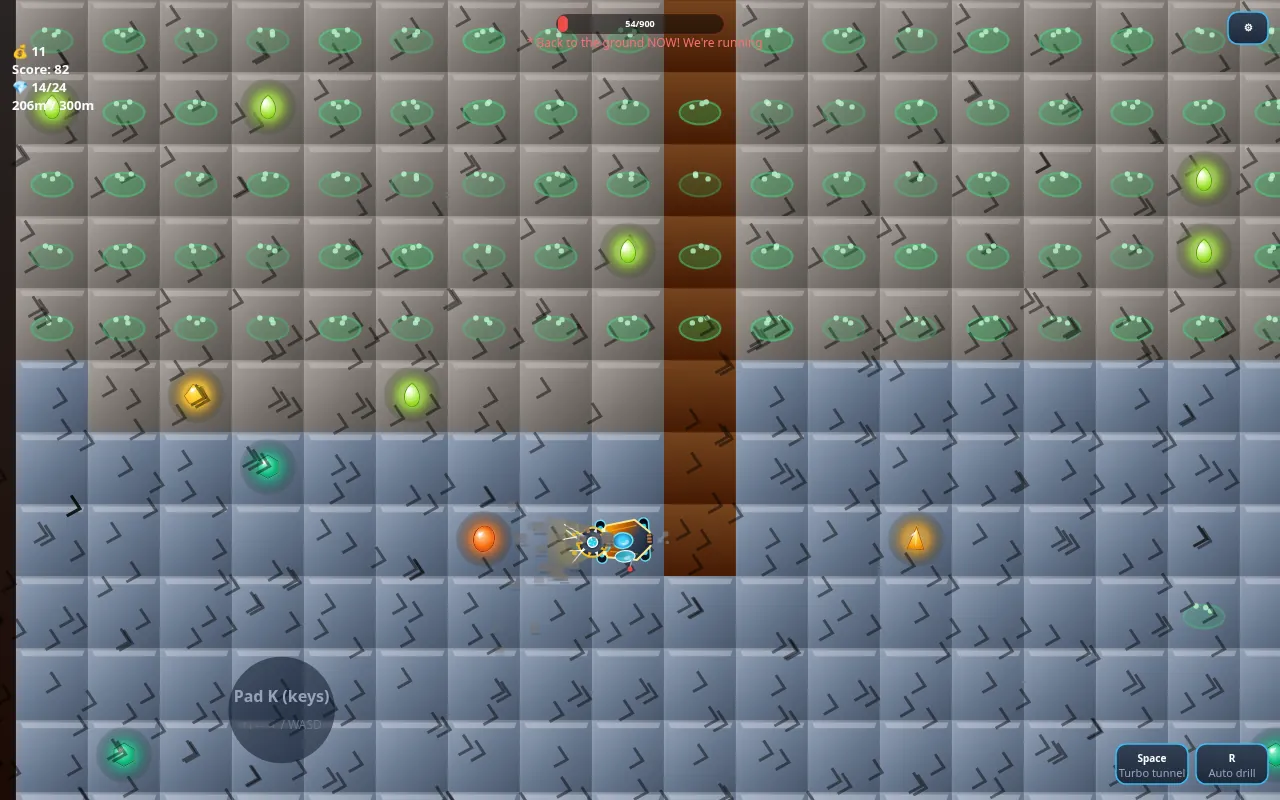
It was far too late. The battery ran out at 211 m and the rescue screen listed what it cost: $11 in cash and 14 gems worth $63. The game also moved us to Mine site #2, so the tunnels we had dug were gone.
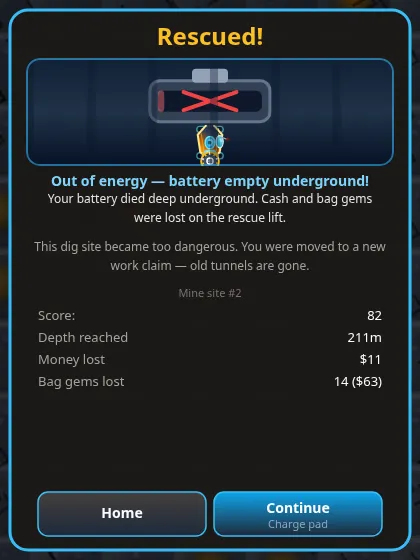
Our upgrades stayed, which is the one bit of good news after a rescue.
Trip two: turn back at half
On the next trip we set ourselves a rule: turn around when the battery is close to half. We went down to 103 m, dug one short side tunnel, and the bar read about half when we turned.
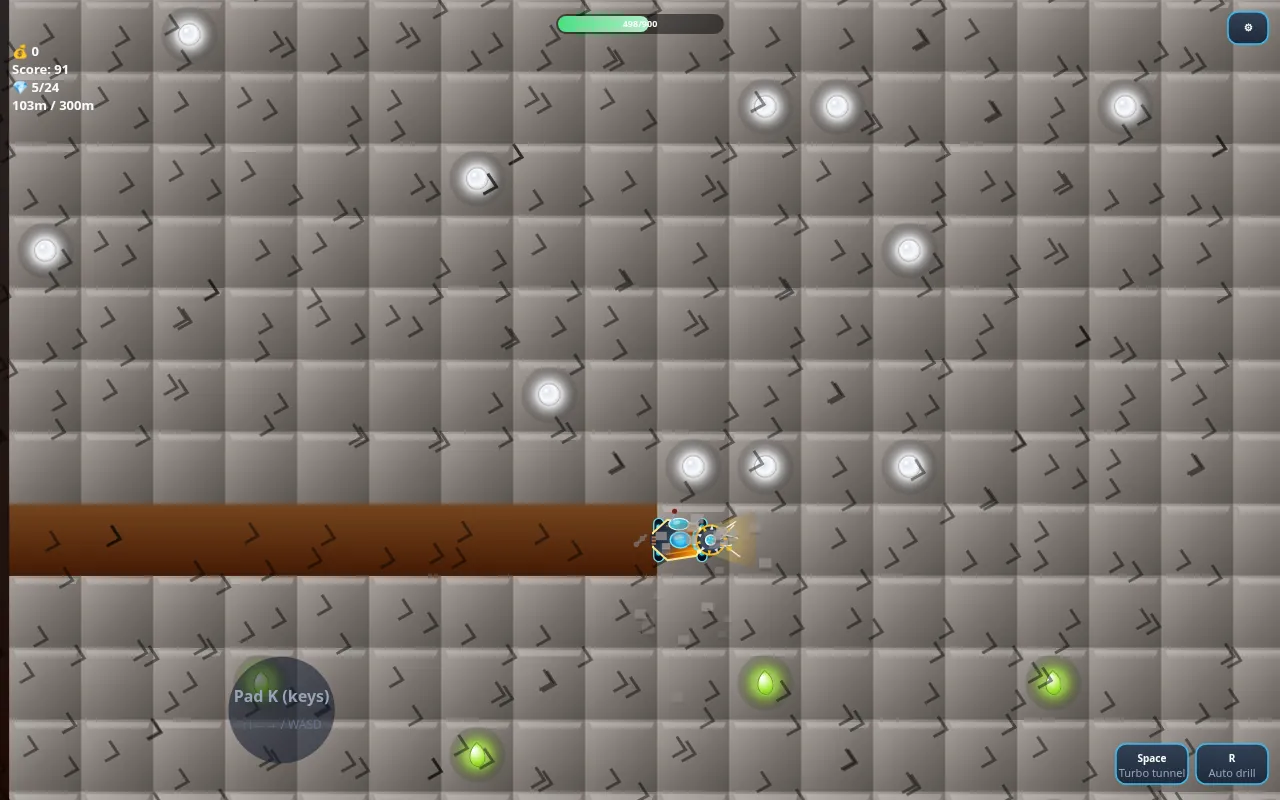
Going back up through your own tunnel is quicker and cheaper than digging, and Space (Turbo) speeds it up in empty tunnels. We reached the shop with power to spare and sold 5 gems for $9. A smaller haul, but nothing lost.
The gem collection
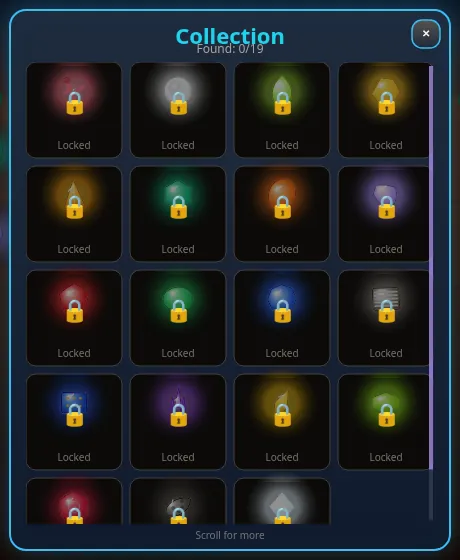
The Gallery card on the home screen opens your Collection: 19 gem types, from coral and pearl near the surface to diamond, each with a rarity from Common up to Mythic. Every one starts locked, and the counter at the top shows how many you have found.
Tips
- Buy all the $1 upgrades first. Five of them cost a dollar on a new save, and the bag and battery levels change your first trips the most.
- Use half the battery to go down. The trip up costs power too. Our 211 m dive proved that the warning comes too late to save a full bag.
- Sell every time you surface. Rescue only takes what you are carrying, and the shop also recharges you fast.
- Save for the Gas Shield before 300 m, not earlier. Bag, battery and drill upgrades pay off sooner.
- Turbo in old tunnels. Space only flies through tunnels you have already dug; it stops at rock.